First Gym Session Outfit Guide for a Comfortable Start
First Gym Session Outfit Guide for a Comfortable Start
Discover What to Wear to Your First Gym Session: Beginner Guide, with simple tips on breathable clothes, shoes, and gym essentials. Starting your fitness journey is exciting, but figuring out what to wear to your first gym session can feel surprisingly complicated. Should you choose leggings or shorts? Is a regular T-shirt enough? Do you need expensive activewear, or can you work out comfortably in clothes you already own?
The good news is that you don't need a designer wardrobe or professional athletic gear to get started. The best gym outfit is one that feels comfortable, allows you to move freely, manages sweat, and helps you feel confident while learning your new routine.
Whether you're planning your first treadmill workout, trying beginner strength training, or attending a fitness class, this no-stress guide will help you choose practical workout clothes without overthinking every detail.
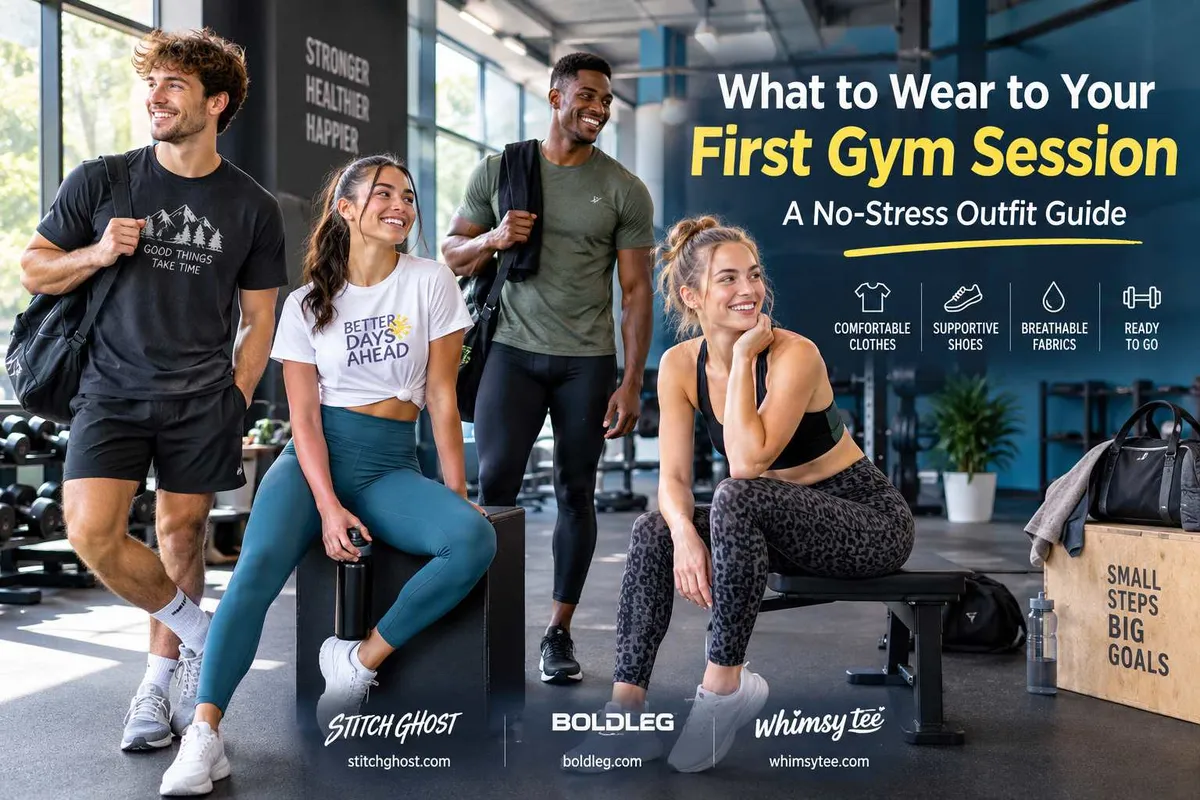
1. Start With a Comfortable, Breathable T-Shirt
For your first gym session, a comfortable T-shirt is one of the easiest and most versatile choices. You don't need a specialized athletic top to begin exercising, but choosing the right fabric can make your workout more enjoyable.
Look for a shirt that:
- Allows your arms and shoulders to move freely.
- Feels lightweight against your skin.
- Doesn't cling uncomfortably when you sweat.
- Provides enough coverage for bending, stretching, and lifting.
- Fits comfortably without restricting your movements.
Moisture-wicking polyester blends are popular for workouts because they can help move moisture away from the skin. Cotton T-shirts can also work well for shorter, low-intensity sessions, although they tend to absorb sweat and may feel heavy during more intense exercise.
Style tip: Choose a simple graphic tee, a neutral-colored shirt, or a bold design that reflects your personality. Your gym clothes can be functional and expressive at the same time.
If you prefer casual clothing with a distinctive visual style, explore Whimsy Tee for graphic T-shirts and everyday clothing inspiration. A comfortable tee can be a useful starting point for building a casual workout wardrobe, provided its fit and fabric suit your activity.
2. Choose Bottoms That Let You Move Freely
Your workout bottoms should support your movements rather than distract you. The right choice depends on your preferred activities, the gym environment, and your personal comfort.
Leggings for flexibility and coverage
Leggings are a popular option for beginners because they offer a close fit that makes movement easy to monitor. They work well for stretching, strength training, indoor cycling, and many other gym activities.
When shopping for workout leggings, look for:
- A comfortable waistband that stays in place.
- Stretchy fabric that allows squats and lunges.
- Adequate opacity when bending or stretching.
- Flat or smooth seams that minimize irritation.
- Fabric suited to your workout intensity and temperature.
Men's leggings can be especially practical for running, cycling, mobility exercises, and layering under athletic shorts. Women's leggings offer similar versatility for a wide range of training routines. Ultimately, the best choice is the one that fits well and feels comfortable.
For performance-focused leggings and inclusive activewear inspiration, visit BoldLeg. The store is a relevant destination to explore when building a wardrobe around comfortable leggings, athletic styling, and everyday versatility.
Athletic shorts for warm workouts
If you tend to get hot easily or prefer more airflow, athletic shorts are another excellent option. They're particularly useful for treadmill sessions, indoor cycling, weightlifting, and general fitness training.
Look for shorts that:
- Have enough room for squats and lunges.
- Stay securely in place during movement.
- Don't ride up or bunch uncomfortably.
- Use a lightweight fabric appropriate for exercise.
You can also wear fitted compression shorts under looser athletic shorts if you prefer additional support and coverage.
Joggers for a relaxed fit
Joggers are a practical choice for light workouts, warm-ups, and gym sessions in cooler weather. Choose a lightweight, flexible pair rather than heavy sweatpants that may trap excess heat.
If you plan to use gym machines or perform exercises near moving equipment, avoid excessively loose hems or drawstrings that could get caught.
3. Wear Supportive Athletic Shoes
Your shoes are one of the most important parts of your first gym outfit. Everyday sneakers may work for some light activities, but footwear designed for your intended workout can offer a more suitable combination of grip, stability, and comfort.
Consider your primary activity:
- Treadmill walking or running: Choose running shoes with appropriate cushioning and a comfortable fit.
- Strength training: Look for stable shoes with a firm base, particularly when lifting weights.
- Fitness classes: Cross-training shoes can provide a versatile option for multidirectional movements.
- Cycling: Indoor cycling may require specific cycling shoes, depending on the bike's pedal system.
Make sure your toes have enough room, your heel feels secure, and the shoes don't cause painful rubbing. New shoes should feel comfortable before you attempt a demanding workout.
You don't need to buy several pairs immediately. Start with one suitable pair based on the activities you expect to do most often.
4. Choose the Right Socks and Underwear
Small clothing details can make a noticeable difference in workout comfort.
Choose socks that fit securely without slipping into your shoes. Moisture-managing athletic socks can help reduce the discomfort associated with sweaty feet, while cushioned areas may improve comfort during walking and running.
Your underwear should fit comfortably beneath your workout clothes without bunching or creating painful friction. Some people prefer seamless designs or moisture-wicking fabrics for exercise.
For sports bras, choose a level of support appropriate for your activity. Low-impact exercise may require less support than running, jumping, or high-intensity classes.
The goal is simple: your base layers should stay in place and allow you to concentrate on exercising.
5. Bring a Lightweight Layer for Warm-Ups and Cool-Downs
Gyms can feel cool when you first arrive, especially if you're exercising early in the morning or during colder months. A lightweight hoodie, zip-up jacket, or breathable sweatshirt can make the transition into your workout more comfortable.
Wear your extra layer during your warm-up if needed, then remove it when your body temperature rises.
A lightweight layer is also useful when walking to and from the gym. Choose something easy to carry and simple to put back on after exercising.
For a coordinated casual look, pair neutral joggers or leggings with a graphic tee and a lightweight outer layer. This combination offers a relaxed appearance without requiring a complicated outfit.
6. Build Your First Gym Outfit Around the Activity
You don't need a different outfit for every exercise. A few adaptable pieces can cover most beginner workouts.
Here are four simple outfit combinations to consider.
Outfit 1: Beginner treadmill session
- Breathable T-shirt
- Lightweight athletic shorts or leggings
- Comfortable running shoes
- Moisture-managing socks
This is an easy starting point for walking, light jogging, or a short cardio session.
Outfit 2: First strength-training workout
- Flexible athletic top or fitted graphic tee
- Stretchy leggings or training shorts
- Stable training shoes
- Comfortable socks
Choose bottoms that allow you to squat, bend, and move through a full range of motion without constantly adjusting your clothing.
Outfit 3: Stretching and mobility
- Soft, breathable T-shirt
- Flexible leggings or joggers
- Comfortable athletic shoes, when appropriate for the exercise
Stretching often involves bending, reaching, and changing positions. Select clothing that stays comfortable and provides coverage throughout those movements.
Outfit 4: Casual gym-to-errands style
- Graphic T-shirt
- Athletic leggings or joggers
- Versatile sneakers
- Lightweight hoodie or jacket
This outfit is ideal if you prefer casual, expressive clothing that transitions easily between everyday activities and a light workout.
For graphic tees and distinctive casual styling, Stitch Ghost is worth exploring as you develop a wardrobe that reflects your personal style. You can combine expressive tops with practical athletic bottoms to create an outfit that feels individual without sacrificing comfort.
7. Pick Fabrics That Match Your Workout
Fabric choice affects how your outfit feels during exercise. You don't need to become a textile expert, but understanding a few basic differences can help you shop more confidently.
Polyester and performance blends
Polyester is widely used in athletic clothing because it is lightweight, durable, and generally dries faster than cotton. Performance blends can also include elastane or spandex to provide stretch.
These fabrics are often practical for cardio, strength training, and higher-sweat workouts.
Cotton
Cotton is soft, familiar, and comfortable for many everyday activities. It can be suitable for a gentle gym session, walking, or stretching.
However, cotton absorbs moisture and may become heavy or clingy during prolonged, sweaty workouts.
Nylon and elastane blends
Nylon blends are common in leggings and fitted activewear. Combined with elastane, they can offer a smooth feel, flexibility, and a close fit.
These fabrics can be particularly useful when your workout involves repeated bending, stretching, and changes in position.
Lightweight recycled fabrics
Some activewear is made with recycled polyester or other recycled fibers. These materials can help reduce demand for virgin raw materials, although their overall environmental impact depends on manufacturing, durability, washing, and end-of-life disposal.
When comparing products, check the fabric composition and care instructions rather than relying solely on labels such as premium, performance, or eco-friendly.
8. Avoid These Common First-Gym Outfit Mistakes
A little preparation can prevent uncomfortable distractions during your first session.
Wearing brand-new clothes without trying them first
Try on your outfit at home and perform a few squats, lunges, and overhead reaches. This helps you identify tight waistbands, slipping tops, or uncomfortable seams before arriving at the gym.
Choosing clothes that restrict movement
Clothing that pulls across the shoulders or limits your leg movement can make basic exercises harder. Prioritize flexibility and a comfortable fit.
Wearing heavy fabrics during intense workouts
Thick sweatpants or heavy cotton shirts may retain moisture and heat. Choose lighter materials when you expect to sweat heavily.
Buying too much equipment too soon
You don't need matching outfits, expensive accessories, or a full collection of technical apparel to begin. Start with a few comfortable essentials and upgrade as you learn what works for you.
Ignoring footwear
Unsuitable shoes can make exercise uncomfortable and may not provide the stability your activity requires. Match your footwear to your planned workout.
Dressing for someone else's expectations
There is no single correct gym aesthetic. Some people prefer fitted leggings and performance tops; others choose loose T-shirts and shorts. Both approaches can work when the clothing is appropriate for the activity.
9. Don't Forget Your Gym Bag Essentials
Your outfit is only part of your preparation. Packing a few useful items can help your first visit feel more organized.
Consider bringing:
- A reusable water bottle.
- A small towel, if required by your gym.
- A spare T-shirt or pair of socks.
- A secure bag for personal belongings.
- Headphones, if you prefer listening to music.
- Any personal items you need after exercising.
You may also want a light snack if it suits your routine and you expect to be at the gym for a while.
Check your gym's rules before your first visit. Some facilities have specific policies regarding towels, footwear, water bottles, and equipment cleaning.
10. How to Look Confident at the Gym Without Overthinking Your Outfit
It's natural to feel self-conscious during your first gym session. You might wonder whether your clothes look right, whether everyone else knows what they're doing, or whether you fit into the gym environment.
Remember that people visit gyms for many reasons, and most are focused on their own exercises.
A few simple strategies can help you feel more comfortable:
- Wear familiar clothing. Your first session isn't the ideal time to experiment with an outfit that feels completely unfamiliar.
- Choose a practical fit. You should be able to move, stretch, sit, and bend without constantly checking your clothes.
- Keep your colors simple if that helps. Black leggings, neutral shorts, and a comfortable tee make outfit coordination easy.
- Add personality through small details. A graphic tee, a favorite color, or a coordinated layer can make your outfit feel more like you.
- Focus on the workout rather than your appearance. Your clothing should support your goals, not become another source of pressure.
You can also prepare your outfit the night before. This small step removes one decision from your morning and makes it easier to arrive ready to exercise.
11. Create a Simple Gym Wardrobe on a Budget
Building a useful workout wardrobe doesn't have to be expensive. Begin with a few versatile pieces that you can mix and match.
A practical starter collection might include:
- Two or three comfortable T-shirts.
- One or two pairs of athletic shorts or leggings.
- One suitable pair of training or running shoes.
- Several pairs of comfortable athletic socks.
- One lightweight hoodie or jacket.
- Comfortable underwear and appropriate sports support.
You can expand this collection gradually as you discover which activities you enjoy and how often you train.
Look for durable stitching, suitable fabric composition, reliable fit, and straightforward care instructions. A well-fitting garment that you wear regularly can offer more value than an expensive item that looks good but feels uncomfortable.
When shopping for versatile clothing, consider how each item fits into your existing wardrobe.
- Explore BoldLeg for leggings-focused activewear inspiration and options for building comfortable athletic outfits.
- Visit Whimsy Tee for graphic T-shirts and casual clothing inspiration.
- Discover Stitch Ghost for distinctive graphic styles and expressive everyday fashion.
These stores offer different ways to approach personal style, from leggings-focused looks to graphic tops and casual streetwear-inspired combinations. Choose pieces based on their actual fit, materials, product details, and suitability for your workouts.
Frequently Asked Questions
What should I wear to my first gym session?
Start with a comfortable T-shirt, athletic shorts or leggings, supportive shoes, and socks that fit well. Add a lightweight layer if needed. Choose clothing that allows you to move freely and feels comfortable throughout your planned workout.
Can I wear a regular T-shirt to the gym?
Yes. A regular T-shirt is suitable for many beginner workouts, particularly short sessions and low-to-moderate-intensity exercise. If you expect to sweat heavily, a lightweight moisture-wicking shirt may feel more comfortable.
Are leggings better than shorts for the gym?
Neither is universally better. Leggings provide coverage and flexibility, while shorts offer more airflow. Choose based on your activity, personal preferences, and how comfortable you feel moving in each option.
What should men wear to their first gym session?
Men can start with a breathable T-shirt, athletic shorts or men's leggings, comfortable socks, and suitable training shoes. The best combination depends on whether the session involves cardio, weightlifting, stretching, or a mix of activities.
What should women wear to their first gym session?
Women can wear a comfortable athletic top, leggings or shorts, appropriate underwear, a sports bra with suitable support, and training shoes matched to their workout. Choose pieces that stay in place and provide comfortable coverage during movement.
Do I need expensive gym clothes as a beginner?
No. You can start with basic clothing you already own if it is comfortable, appropriate for exercise, and allows you to move safely. Invest in specialized activewear gradually as your training needs become clearer.
Is cotton or polyester better for working out?
Polyester and performance blends generally dry faster and are often better suited to sweaty workouts. Cotton can be comfortable for light exercise but may hold moisture during more intense sessions.
Should I wear compression clothing to the gym?
Compression clothing is optional. Some people prefer the close fit and support it provides, while others prefer looser garments. Select compression pieces that fit correctly and do not restrict movement or breathing.
Can I wear graphic tees to the gym?
Yes. Graphic tees are a practical option when their fabric, fit, and design suit your activity. Choose a shirt that doesn't restrict movement and is comfortable when you sweat.
What should I avoid wearing to the gym?
Avoid clothing that restricts movement, shoes unsuitable for your workout, fabrics that become uncomfortably heavy when wet, and excessively loose garments that could interfere with equipment. Make sure your outfit is appropriate for the exercises you plan to perform.
Final Thoughts: Keep Your First Gym Outfit Simple
Your first gym session doesn't require a perfect outfit. It requires clothing that helps you feel comfortable, move confidently, and focus on learning the basics.
Start with a breathable T-shirt, suitable athletic bottoms, supportive footwear, and a few simple essentials. Experiment with leggings, shorts, performance fabrics, and graphic tops as you discover your preferences.
For more clothing inspiration, explore Stitch Ghost, BoldLeg, and Whimsy Tee. Each offers a different angle on personal style, helping you consider how casual clothing, graphic designs, and leggings-focused looks can fit into your everyday wardrobe.
Most importantly, remember that consistency matters far more than appearance. Choose an outfit that works for you, show up, and take that first step toward your fitness goals.